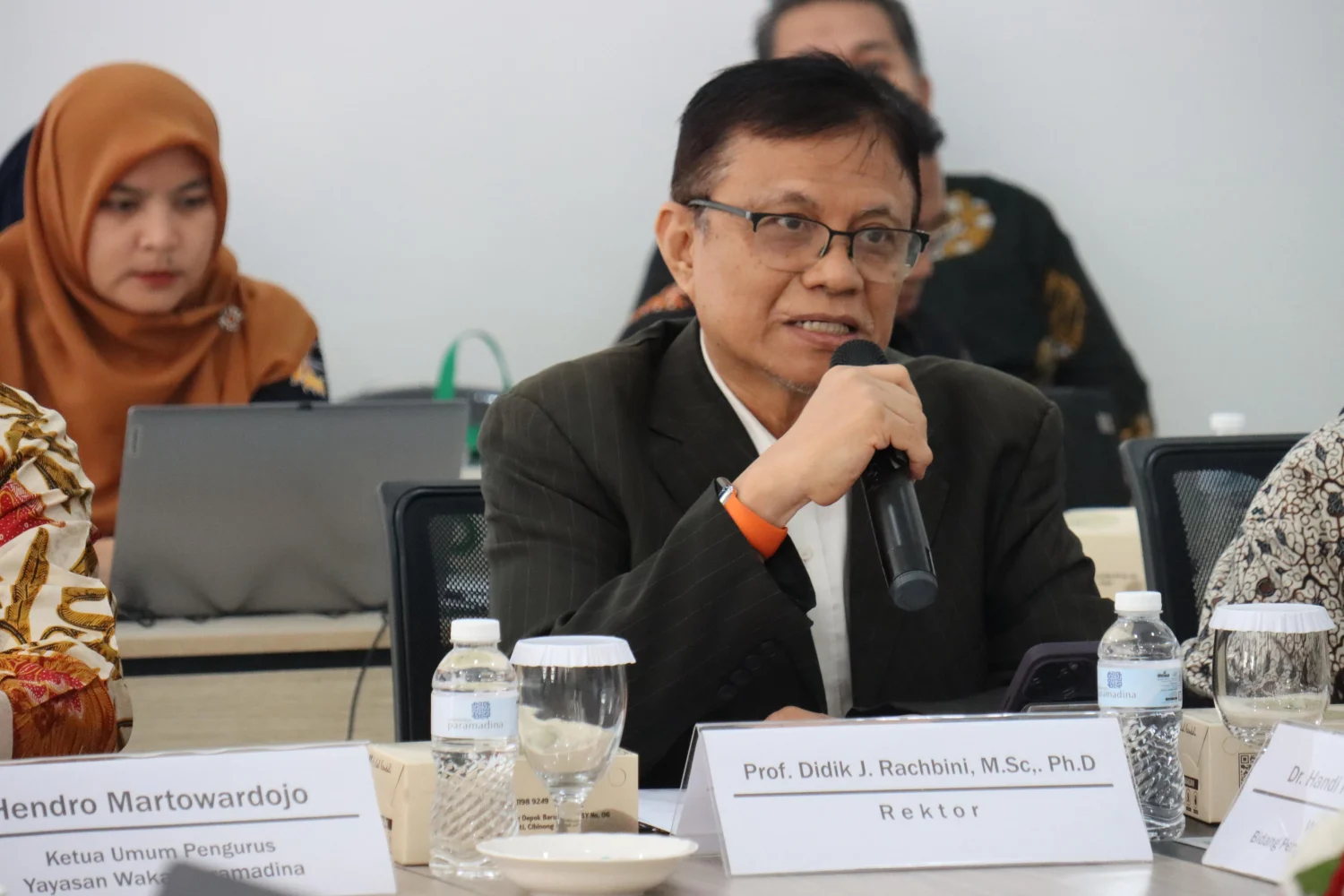
Batam is considered to have the potential to develop into one of Asia’s new investment and economic centers by leveraging its strategic location near Singapore, its position along international shipping routes, and its various investment facilities.
Rector of Universitas Paramadina Didik J. Rachbini said Indonesia needs to strengthen investment and exports oriented toward global markets, especially amid weakening public purchasing power.
According to Didik, Vietnam’s experience demonstrates the importance of economic policies that are more open to investment and global markets. He said a similar approach could serve as a reference for Indonesia in promoting economic growth.
“Indonesia will never achieve the 7–8 percent growth rate that has been promised if it avoids investment and export policies oriented outward. The key is simple: just imitate Vietnam,” Didik said.
He also sees changes in global geopolitical dynamics as potentially opening opportunities for Indonesia to attract new investment. In his view, the geographical diversification of investors is an opportunity that regions such as Batam can take advantage of.
Batam is considered to have several advantages because of its proximity to Singapore and its location along international trade routes. Didik even said Batam has the potential to be developed as a “Little Dubai” in Sumatra.
“With a population of more than 2 million, Batam can be planned to become a ‘Little Dubai’ in Sumatra,” he said.
Digital Investment Becomes a Catalyst
Didik said investment in Batam in 2025 reached Rp69.3 trillion, with the digital sector accounting for around Rp8.56 trillion. The Batam-Bintan-Karimun area is also being promoted as a green industry hub linked to Indonesia-Singapore clean electricity cooperation.
He also highlighted Nvidia’s planned investment in Batam, reportedly amounting to around US$4.5 billion or Rp80.55 trillion, for the development of artificial intelligence data center infrastructure.
Nvidia’s DSX AI Factory plan in the Batam Special Economic Zone (KEK) is said to involve Firmus Technologies from Australia and Day One from Singapore, with operations targeted to begin in stages from 2027 to 2028.
Didik said the entry of high-tech investment could become a catalyst for further investment in Batam, while complementing the policy of downstreaming natural resources.
However, he stressed that these opportunities need to be supported by legal certainty, sound regulations, and a healthy business climate. In his view, Free Trade Zone (FTZ) facilities and incentives in economic zones are assets that can be strengthened to attract more global investors. (Risma)

Comments 0
Sign in with Google or Facebook to like, save and comment.